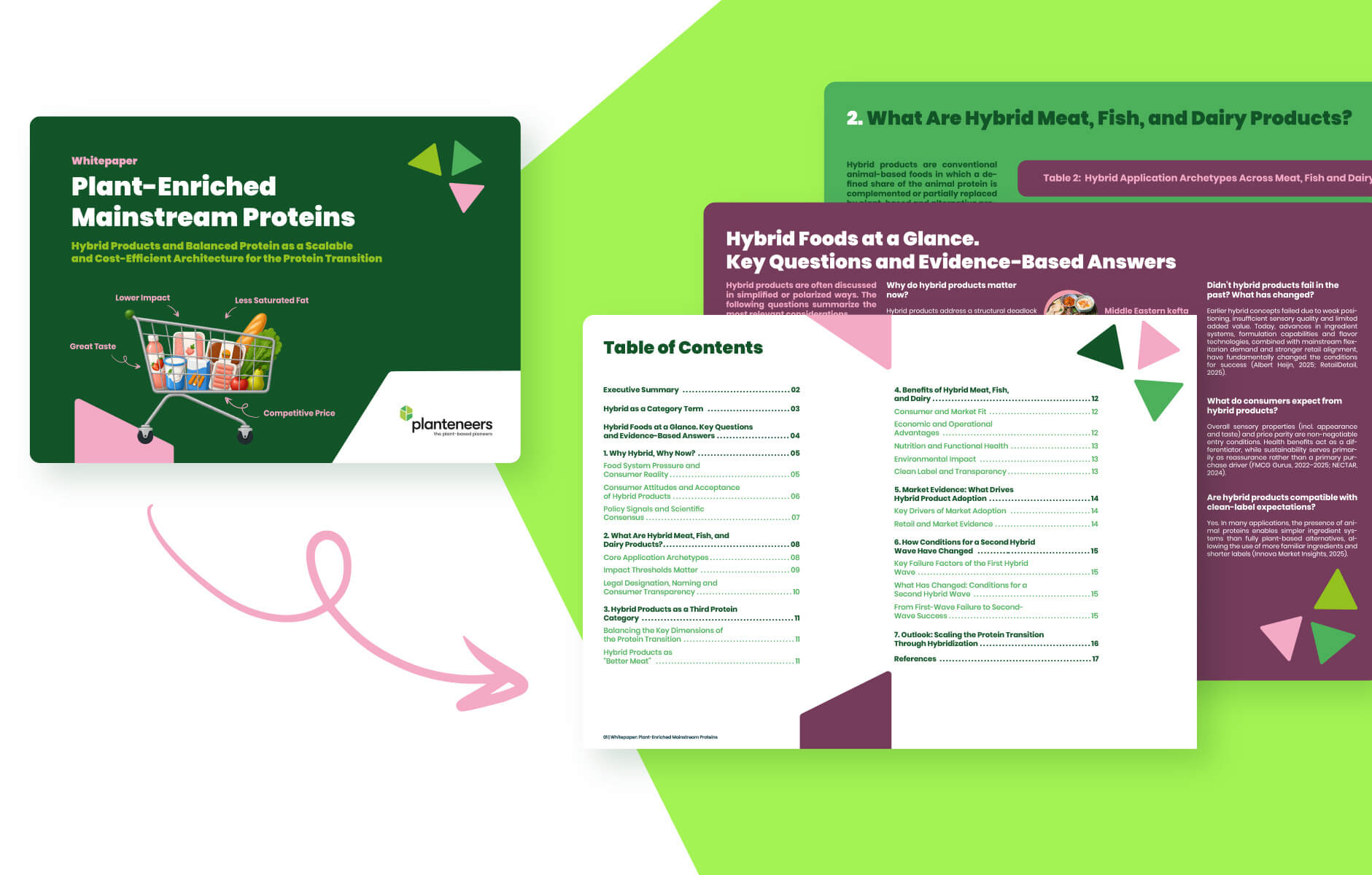
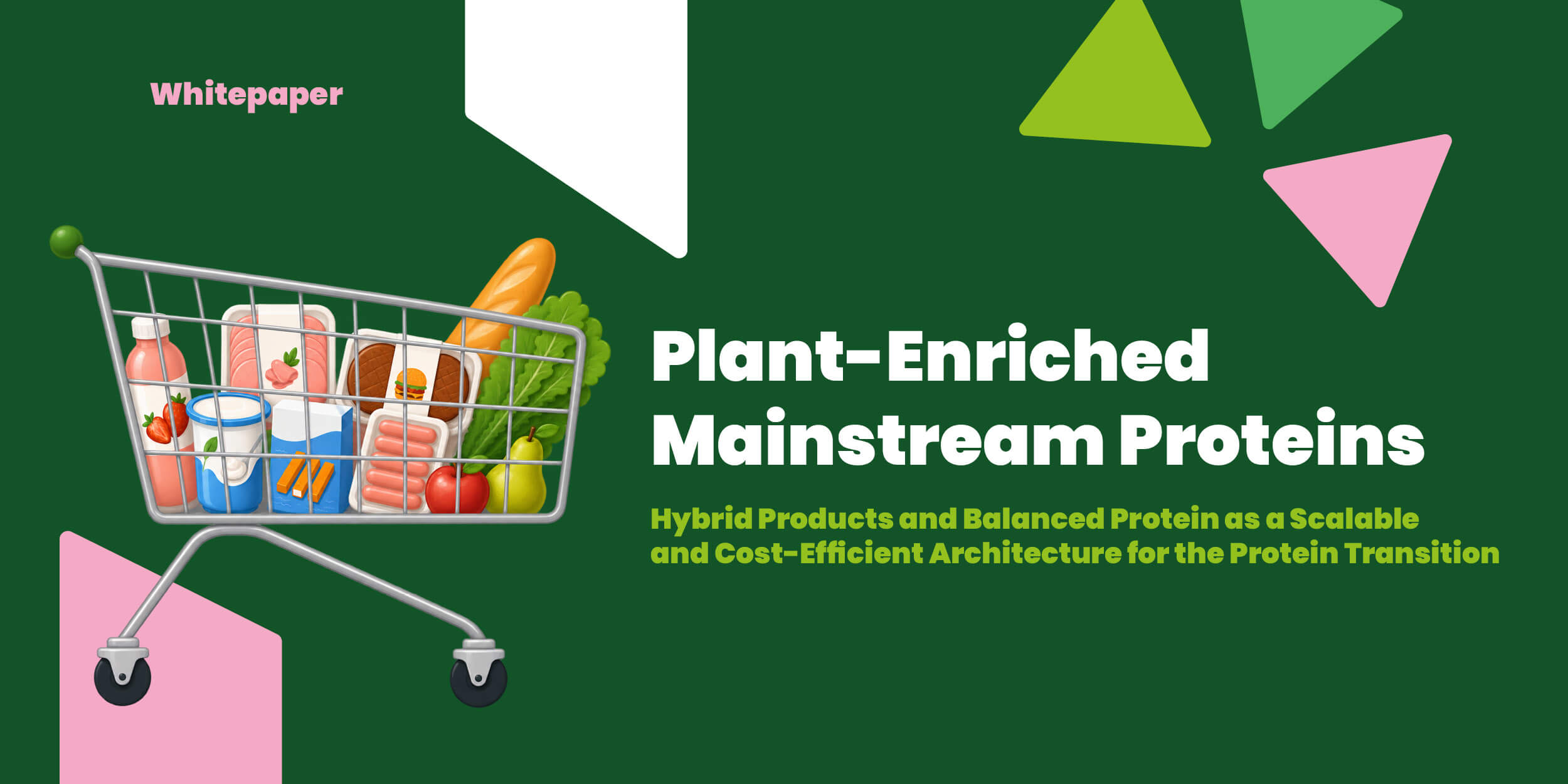
The protein transition faces a fundamental challenge: consumers are not adopting fully plant-based alternatives at the scale required to meet sustainability goals, while maintaining the status quo is becoming increasingly difficult due to environmental, economic and supply chain pressures.
Rather than a choice between animal and plant-based foods, the future protein landscape will combine animal, plant-based and novel protein sources to meet consumer, nutritional and sustainability needs. Hybrid products play a critical role by combining animal and plant-based ingredients in familiar formats.
They offer manufacturers a scalable and cost-efficient way to reduce environmental impact while maintaining the taste, affordability and familiarity consumers expect.

“The Protein transition will not be decided by what is technologically possible, but by what consumers adopt at scale.“
Dr. Pia Meinlschmidt
Head of Product Management, Planteneers
Why Download this White Paper?
- Understand where hybrid products fit into the future protein landscape
- Identify commercially viable opportunities across meat, fish and dairy
- Learn from emerging retail success stories across Europe
- Gain evidence-based arguments for internal innovation and strategy discussions
Key Insights You'll Take Away
Who Should Read This White Paper?
Ideal for:
- Product Development Teams
- Innovation & R&D Managers
- Category Managers
- Sustainability & ESG Leads
- Retail Buyers
- Food Industry Executives
- Alternative Protein Stakeholders
Sneak Peek: Inside the White Paper